Home · Farm power
The signature desk
Horse, steam or tractor?
Official answers in Parliament still give careful figures for horses on farms, and for tractors. They do not always cover the same years, or the same part of the country. The Museum of English Rural Life, separately, describes the tractor that turned a “mechanical horse” into a field machine. [source] [source] [source]
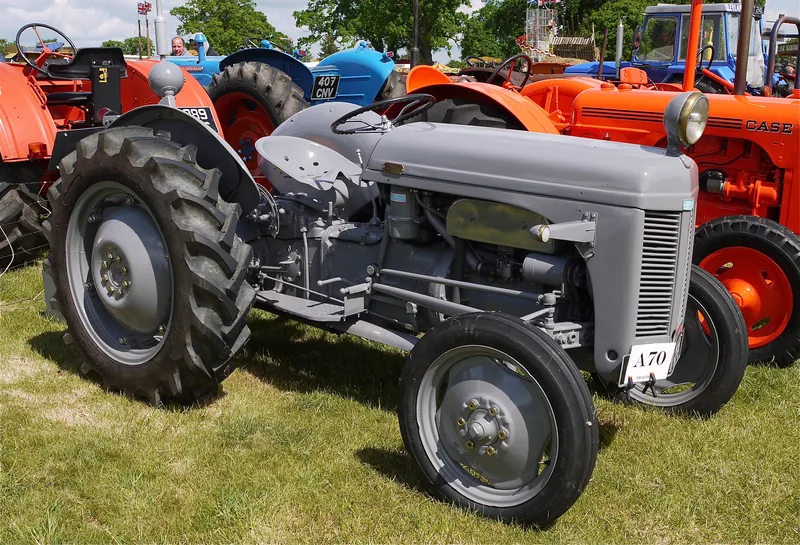
Official answers in Parliament still give careful figures for horses on farms, and for tractors. They do not always cover the same years, or the same part of the country. This desk keeps them unblended. It is not a single “horses versus tractors” chart.
The official horse counts
On 21 November 1951 the Minister of Agriculture, Sir T. Dugdale, answered a question about the horse population. He said the only returns collected were of horses on agricultural holdings at the date of the June census, and he gave figures for England and Wales. [source]
The official totals were 1,305,600 in 1900, 1,164,200 in 1925, and 364,400 in 1951, the last of those marked as provisional. [source] The 1951 table also breaks “horses used for agricultural purposes” into 145,800 mares and 102,100 geldings. The 1900 and 1925 columns did not separate geldings in the same way; a note on the official table says some lines were “not separately collected.” This desk does not add the lines together, and it does not invent a 1900 gelding figure.
Steam, before the tractor
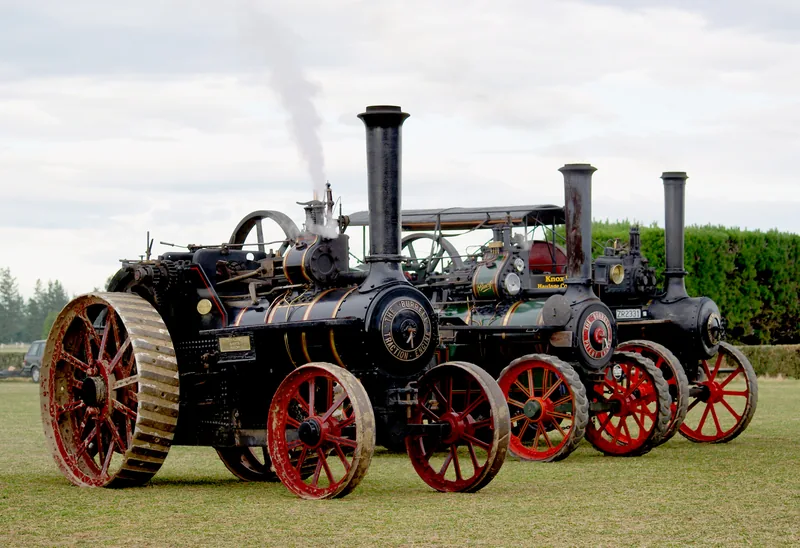
A traction engine is a steam engine built to move itself and to drive farm machinery. It is not a tractor. The two are kept distinct on this site. The photograph on this page shows a preserved Burrell engine in the foreground, with other preserved engines behind it. The photograph is from New Zealand; the company’s history is at Thetford, Norfolk, and that is not the location of this picture.
Steam on the farm is part of the same story as horses and tractors, but the official June-census horse figures and the ministerial tractor figures quoted here are not counts of traction engines. This desk does not treat a steam engine as a missing line in those tables.
The tractor figures, kept in their own geography
On 20 April 1939 the Minister of Agriculture, Sir R. Dorman-Smith, said that “an inquiry carried out in September, 1937, indicated that there were at that time about 43,000 tractors on farms in England and Wales.” [source] That is an inquiry, not a named census total, and it is for England and Wales.
On 23 March 1950 a later Minister, Mr T. Williams, answered a question about agricultural tractors on farms in the United Kingdom. He said: “It is estimated that in 1939 there were about 55,000 agricultural tractors in use in the United Kingdom. According to census returns, there were about 245,000 in January, 1948.” A further census had just been taken; “the best estimate that can be given in the meantime is that there are about 300,000 in use at present.” [source]
Those 1950 figures are for the United Kingdom. The 1951 horse totals are for England and Wales. They are both official, and they are not the same geography. This desk does not subtract one from the other.
The grey Fergie
The Museum of English Rural Life, at the University of Reading, describes a Ferguson TE20 of 1948 in its collection. Harry Ferguson, “an inventor and engineer from Northern Ireland, devised a revolutionary new system for hydraulically attaching implements to the back of a tractor.” In that way, the museum’s label says, “the tractor was transformed from a mere mechanical horse into an effective field machine.” [source]
The same label says Ferguson had his tractor made first by David Brown in 1936, and by Ford in America from 1939 to 1946, “before production was switched to England in 1946, under the Ferguson name.” The result was “the classic ‘grey Fergie’, the TE20,” and “the hydraulic three point linkage for attaching implements remains the basis of modern tractor design.” [source]
What this desk is not
This desk is not a single chart of “horses versus tractors,” because the official figures quoted here do not share one geography and are not all census totals. The 1951 horse table is a June census for England and Wales. The 1937 tractor figure is an inquiry for England and Wales. The 1950 tractor figures are ministerial estimates and a census return for the United Kingdom.
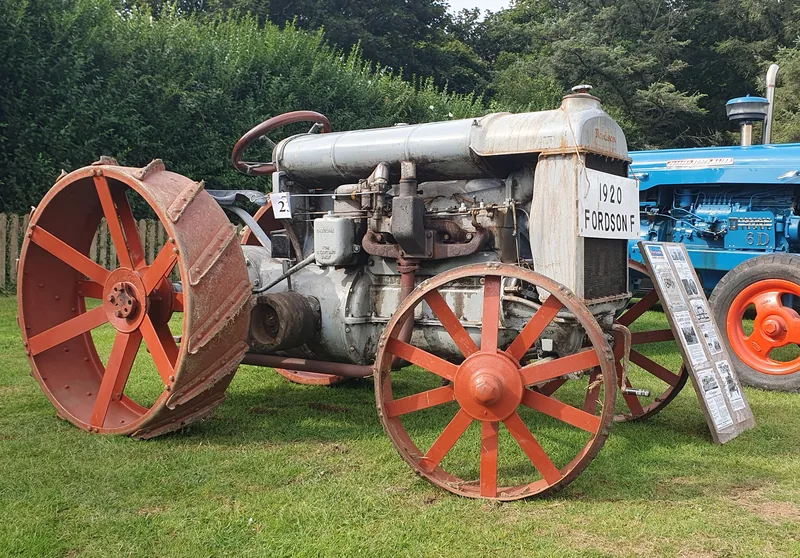
It is also not a photograph of a working 1940s field. The Ferguson TE20 and the 1920 Fordson F on this site were photographed at later gatherings. Their captions say so.
The official figures, in order
This list stays in view. It is the same official sequence the desk is reading from.
- June census, 1900Horses on agricultural holdings in England and Wales: 1,305,600. [source]
- June census, 1925The same official series: 1,164,200. [source]
- September 1937An inquiry “indicated that there were at that time about 43,000 tractors on farms in England and Wales.” [source]
- 1939, United KingdomThe Minister of Agriculture in March 1950: “It is estimated that in 1939 there were about 55,000 agricultural tractors in use in the United Kingdom.” [source]
- January 1948The same answer: “According to census returns, there were about 245,000 in January, 1948.” United Kingdom. [source]
- March 1950“The best estimate that can be given in the meantime is that there are about 300,000 in use at present.” United Kingdom. [source]
- June census, 1951Horses on agricultural holdings in England and Wales: 364,400, marked provisional. [source]
A short check
Can you keep the official figures distinct?
What official total did the Minister of Agriculture give for horses on agricultural holdings in England and Wales in 1900?
The March 1950 ministerial estimate of about 55,000 agricultural tractors in 1939 was for…
According to the Museum of English Rural Life, when was production of Ferguson’s tractor switched to England?
Enjoyed the farmyard?
No pop-ups. No intrusive advertising. Just interesting stuff. A little support helps the next farming site get built.